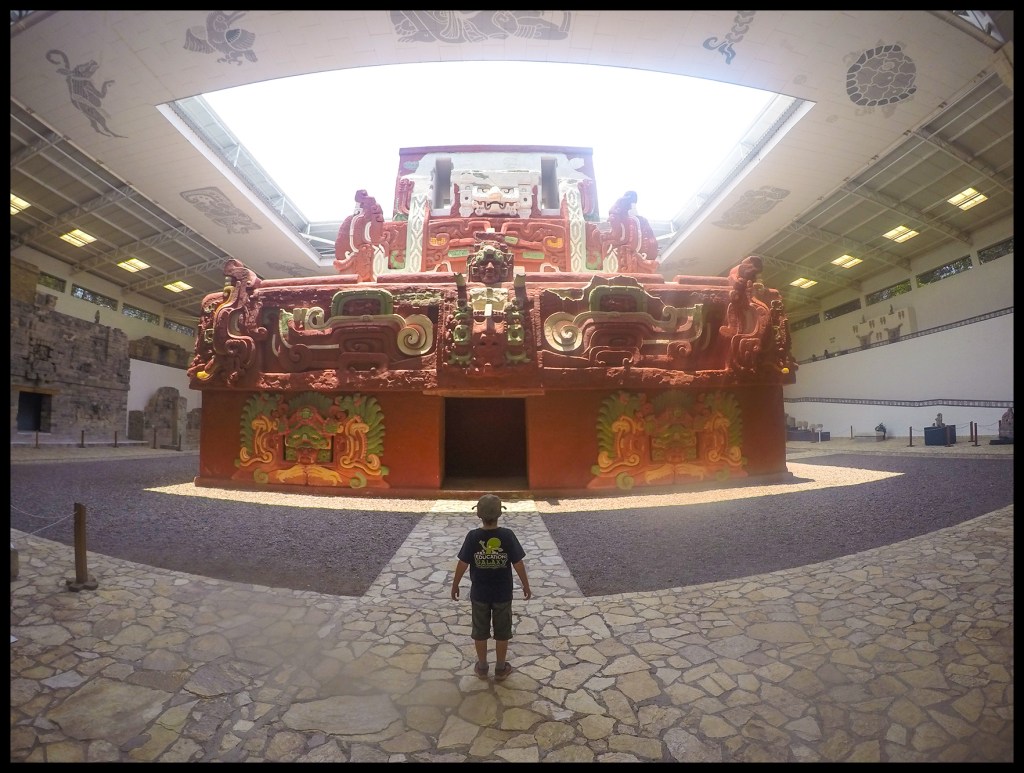

I scrambled onto the old rock wall and looked down. There, right in front of me, was the residential zone, where the Kings of Copan had lived. We were in the ruins of Copan, and the majority of the ancient city was probably still hidden by jungle and earth.
Copan is an ancient Maya city. It was very important – especially during its peak in the early 9th century, when it contained about 20,000 people. Along with Palenque in Mexico and Tikal in Guatemala, Copan was one of the most important Maya settlements to have ever existed.
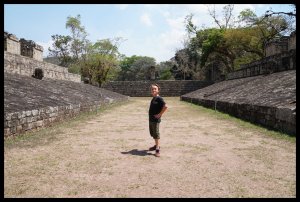
We learned a ton. One of the most interesting things we learned is about human sacrifice. People would play a soccer-like game. They were organized into two teams. The goal was to hit macaw heads that were carved in various places around the pit. This scored a point; the number may vary. Whichever team had the most points at the end of the match was the winner. The captain of the winning team would be taken away and never seen again.

He laid on his back on an altar carved like a turtle. Then his head was cut off. His heart was placed in a ditch made for hearts, still beating. The blood would pour out of the cracks in the rock and was collected in seashells. Then it was poured on a piece of paper that was then burned. This was an offering to the gods – to bring rain during a drought, to bring a good harvest, etc.It was considered an honor to be sacrificed to the gods. I, though, would try to lose to spare my life.
On top of that, the Mayans thought that after death, the soul would begin a dangerous journey through the underworld to paradise, thus being reborn. So they buried their kings and nobles in fetal position.

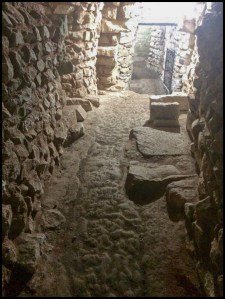
One of my favorite parts was the tunnels. From the heart of the ruins, they ran three miles into the countryside. They hadn’t been dug by the Mayans. Archaeologists had built them to show the underground parts of various temples. We could only go in a small fraction of the tunnels, but they were still amazing. We saw the mask of the sun god, the detailed, colorful carving of a macaw head, and much, much more.
After we got out of the tunnels, we were shown the true ground level, which was 25 feet below the ground level in the city of Copan, and five feet above the water table. There, it was easy to see the five layers of the ruins. However, there had been 16 kings. Why weren’t there 16 layers? Well, because only some of the kings built whole new layers. During king #14’s rule, he decided that he wouldn’t build on top of the previous king’s work, which was normally how the city developed. Everyone else after him followed his example, leaving king #13’s work shown to the world.
Copan was gorgeous. If you ever get a chance to go, you should.





 Round the World Kid